Saturday, October 30, 2010

Platos Typicas

Food of the jungle(or pig) and fried banana are typical plates at this restaurant.  They also serve shrimp.  We think they are somewhat like the crawdads at home.  The orange juice is the best in the world, freshly squeezed from oranges in the field across the street.

Sightseeing

The owl wasn't bothered by our sight seeing and the long toothpick thorns are visible on this tree.

If you look close you can see the chicken wire used to hold the rocks in place for the banks of the river.  If you look really close, you still can't see water in the river.  We saw water in one river once, during the time it rains up in the sierras.

The cactus plants are scraped and the residue used in cosmetics.  The fences around fields are made of limbs from thorn trees.  The thorns are several inches long and we have seen them used for toothpicks.

Thursday, October 28, 2010

The rich get richer

The landowners have the big houses.  This hacienda was owned by the church until they were expelled in the 1600's.
The workers live in small rooms on the hacienda.

This herd of goats, sheep and donkeys crossed in front of us.  We aren't sure what they find to graze on.

The cows also live on this hacienda.

They have a bit of everything.  Usually, haciendas are self sufficient and grow what they need.  This cotton field is harvested by hand.  In Ica where the fields are larger, they do use machines to harvest.  A pretty yellow blossom  before  the soft puff ball you see in the front.

Jesuit Church - 1500's

These tombs held the bodies until they decayed.

The bones were then deposited in the cellar or vault underneath, after the bodies decayed.

The stairs lead to the tombs.  We made lots of noise to scare any creatures away before we entered.

Funds are needed to restore some of these ancient buildings that are on an endangered list.


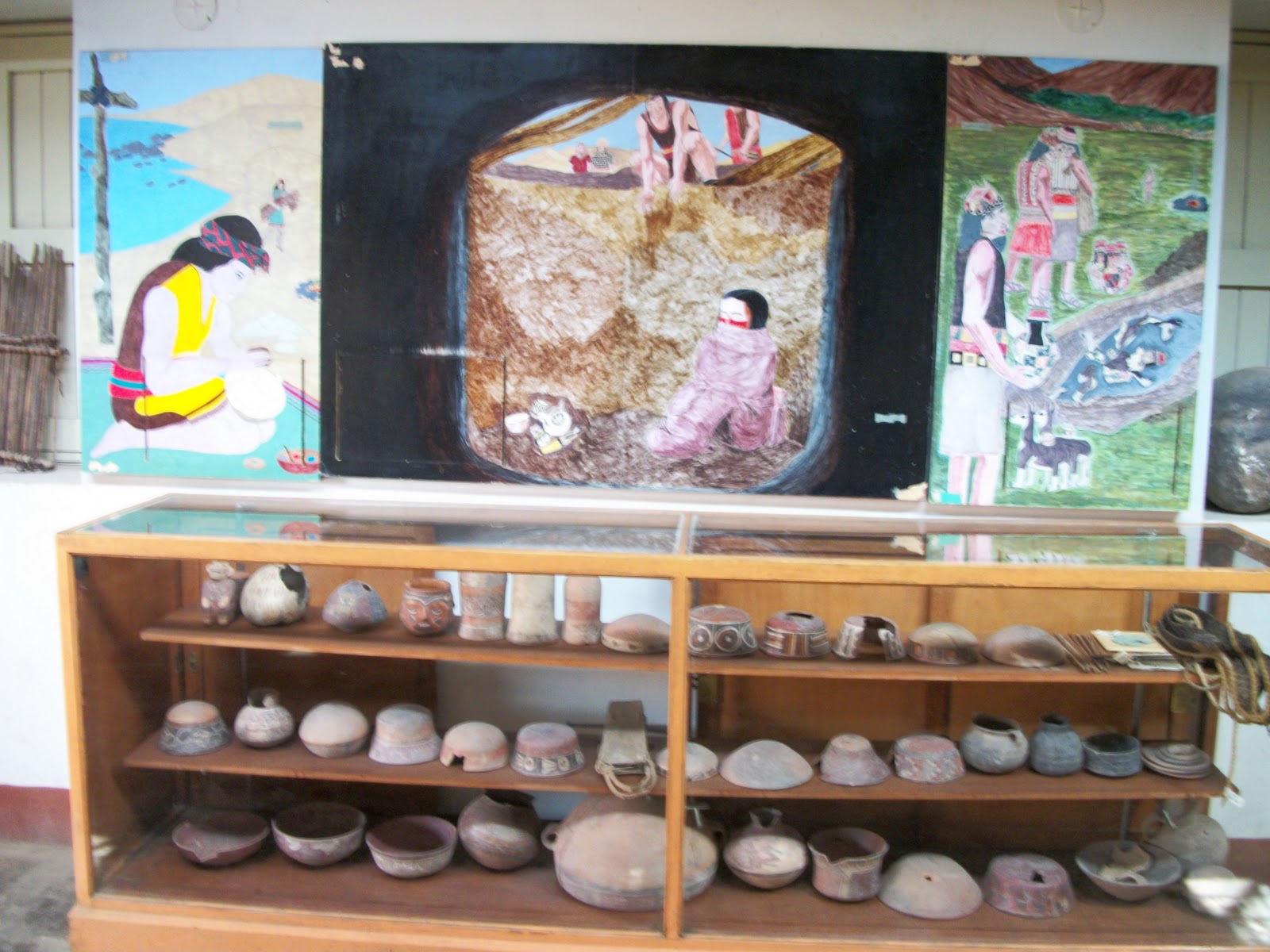
The artifacts and mummy were found in desert ruins.  The mummy had been left by grave robbers

Tree of life?


The Nazca Lines are a series of ancient geoglyphs dating 400-650 AD.  They are very fragile, made from brushing off the top layer of pebbles to expose the whitish ground underneath.  The dry, hot climate preserves these lines.
A family appears as the subject of this set of lines.